
Railroad benzene exposure and leukemia risk
If you worked around benzene for years on the railroad, it's worth knowing that long-term exposure is a known risk factor for acute myeloid leukemia (AML), a blood cancer. If you were diagnosed and the railroad's negligence played even a small part in your illness, a federal law for railroad workers may let you seek compensation from the railroad.
Call +1 (888) 716-2611 Free FELA claim review if this was part of your railroad work
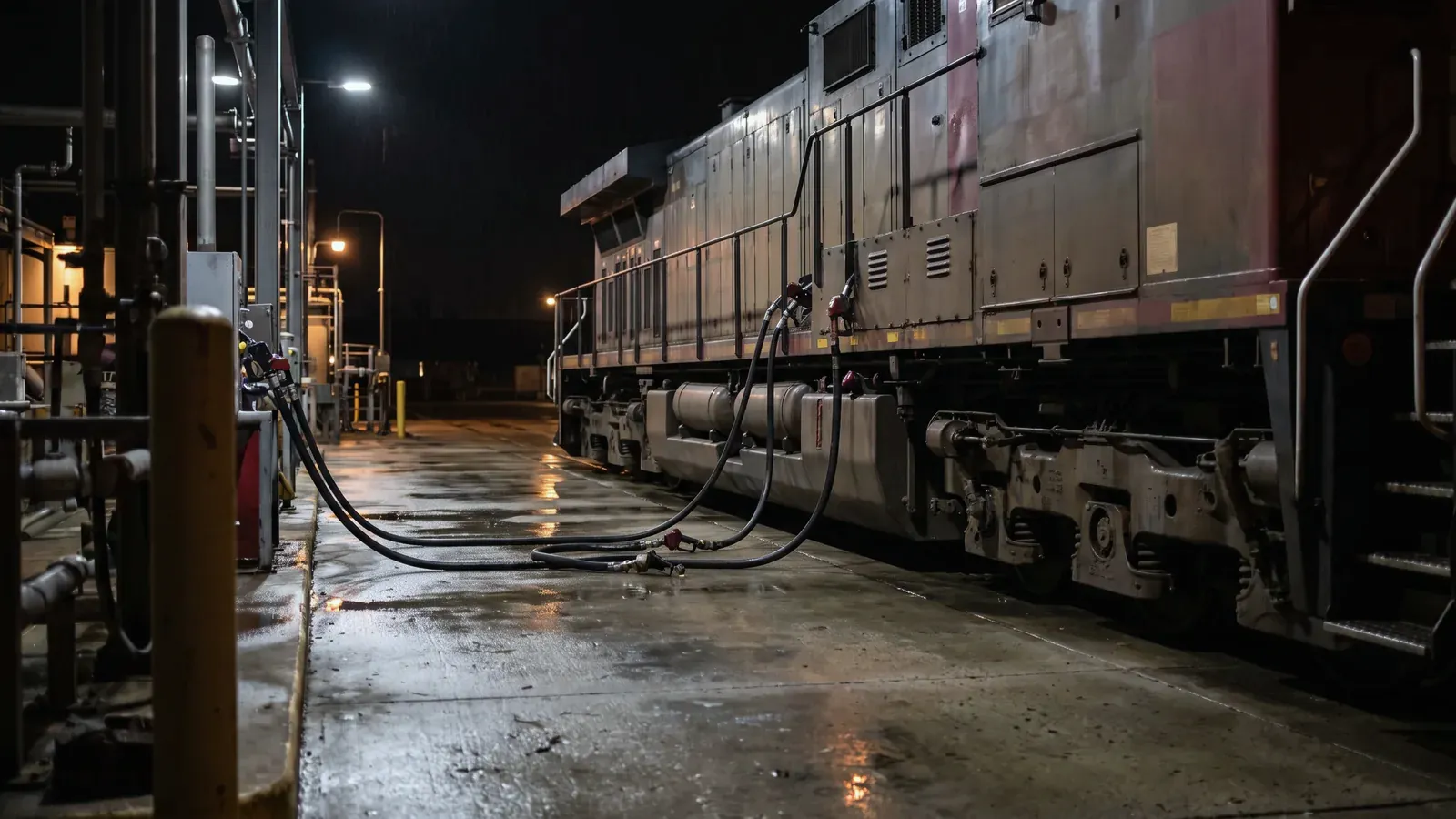
Benzene and where it is found
At room temperature, benzene is a colorless or light-yellow liquid. It is mainly used as a solvent, it is used to make many other chemicals, and it is found in gasoline. Most benzene made now starts from crude oil.
Breathing is the main way benzene gets into the body. People in jobs that make or use benzene can have the highest exposure. It can also appear in glue, adhesive products, cleaners, and paint removers.
The American Cancer Society points to car and truck exhaust, gasoline, cleaning supplies, and paints as common places benzene shows up. Federal and state rules have reduced workplace benzene exposure in recent decades.
Benzene and leukemia risk
According to the National Cancer Institute, benzene exposure raises the chance of leukemia and other blood problems. Among the risk factors for AML, the American Cancer Society includes being around benzene for a long time.
AML has other known risks too. These include high-dose radiation, radiation given as cancer treatment, and smoking, the only proven lifestyle risk factor. The disease is seen more often as people get older and is a little more common in men.
Researchers have also studied whether working around diesel, gasoline, and other chemicals and solvents raises AML risk. That research has not produced a firm link.
Engine exhaust and multiple myeloma risk
A study from 2001 examined multiple myeloma and benzene exposure. The researchers combined results from earlier studies and grouped workplace exposure sources into four categories, including engine exhaust. The combined studies found a link between workplace exposure to engine exhaust and multiple myeloma, a blood cancer.
That same study did not find a clear tie to benzene, other solvents, or petroleum products. Its authors said benzene alone was not a likely cause of multiple myeloma. They raised the possibility that other harmful chemicals in engine exhaust could play a role, and they asked for more research.
Filing a claim under FELA
Most U.S. workers injured through work use state workers' compensation. Railroad employees do not. They seek their losses directly from the railroad through FELA, the Federal Employers' Liability Act.
FELA requires the railroad to pay for an injury or death caused entirely or partly by negligence from its officers, agents, or employees. Negligence means not using reasonable care. The Supreme Court has said the railroad's negligence only needs to contribute in some way, even a very small one.
FELA is not limited to sudden accidents; it also covers illness that develops slowly through work. The Supreme Court reached that result in Urie v. Thompson in 1949.
A few added protections matter for workers:
- A worker who shares some blame can still win money, but the jury cuts the award by that worker's percentage of fault.
- When railroad negligence contributed, the worker is not treated as having agreed to the dangers of the job.
- Under FELA, a railroad rule or contract meant to stop workers from voluntarily sharing what they know about a coworker's injury or death has no legal force.
The three-year deadline
A FELA lawsuit has to be filed within three years, in either federal or state court. With a disease that builds slowly, the clock begins once the harm from that exposure becomes apparent.
That's why it's worth acting early. In January 2026, a New Jersey appeals court ruled against a railroad car inspector with bladder cancer. He was diagnosed in May 2014, when his doctor linked the cancer to what he had breathed at work, and he filed in April 2019, so the court ruled that claims for the cancer as it existed in 2014 were too late.
Information a claim review asks for
A review requested through this site is sent to a law firm that handles FELA cases and advertises here, and there is no charge. Calls may be recorded so the office keeps an accurate account of your work history. It helps to have these points ready:
- Which railroads employed you, and during what years.
- The jobs you held.
- Which yards, shops, or rail lines you spent your work time in.
- The diagnosis you received.
- The date a doctor first said it might be work-related.
Common Questions
What settlements are possible in railroad cancer lawsuits?
The public sources do not give an average figure. Under FELA, a worker can seek medical costs, wages already lost and wages expected to be lost, and payment for pain and suffering.
If a worker passes away, may the family file a claim?
They may. The case is brought by the personal representative, the person handling the worker's estate, on behalf of the husband or wife and the children left behind.
Does it harm your health to live beside train tracks?
The sources used here do not look at homes beside train tracks. They report that outdoor air contains small amounts of benzene from vehicle exhaust, gasoline vapors, smoke, and industrial activity.
Does smoking affect benzene exposure?
Yes. In the United States, cigarette smoke makes up about half of total benzene exposure. For people who smoke, 90 percent of their exposure comes from their own smoking.
Why is cancer so seldom seen in railroad injury records?
Because cancer tends to surface many years after the exposure happened, the worker has frequently already left the job by then. Most work-related cancers never show up in those FRA injury reports, so a missing report does not mean there is no claim.
Call +1 (888) 716-2611 Questions about your own case? Ask in a free FELA claim review by phone, or send the short form