
Railroad asbestos exposure and cancer
Railroad workers had the heaviest asbestos exposure in the steam era, when shop crews repaired locomotives, boilers and steam pipes wrapped in it. Illness from those fibers may not show up for decades, sometimes after retirement. The Federal Employers' Liability Act, or FELA, may allow a claim if the railroad's negligence contributed to the illness, and if the worker has died, the claim can be brought for the family. The free review connects you with a law firm that handles railroad workers' FELA claims and advertises on Railroad Cancer. The reviewer asks about the railroads and years worked, job titles, shops or yards, and the diagnosis.
Call +1 (888) 716-2611 Free FELA claim review if this was part of your railroad work
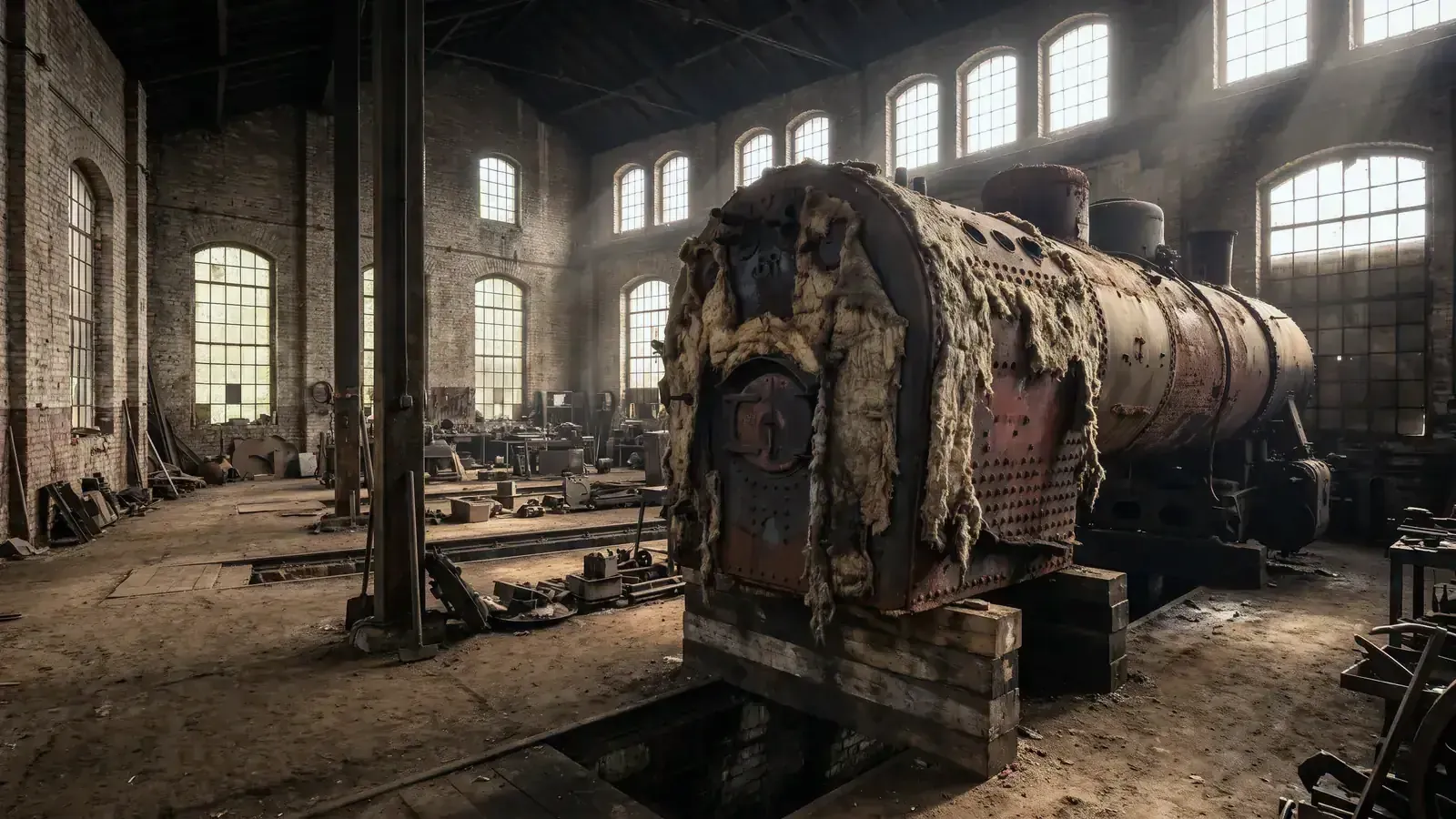
Where did railroad workers come into contact with asbestos?
Asbestos is the common name for six fibrous minerals found in nature. Since the late 1800s in North America, it has been used to insulate boilers, steam lines, and hot water pipes, and also for brake shoes and clutch pads.
Back in the days before railroads moved to diesel power in the 1950s, some employees faced heavy exposure at work. The highest exposure was among people who repaired steam locomotives.
A survey of 514 employees at a working US railroad found likely asbestos exposure in 21 percent of workers aged 50 or older. For workers 49 or younger, the figure was only 3 percent. Many of these exposures lasted a short time, typically around three years, with a range from six months to 15 years.
That survey also reported that 30 percent of the older workers with exposure held job titles that gave no sign of their earlier exposure. So if you spent even a few years in a railroad shop, you may have been exposed, even if your later jobs had nothing to do with asbestos.
Which cancers are tied to asbestos?
Health agencies in the United States, along with the World Health Organization's cancer agency, all treat asbestos as a known human carcinogen. The strongest evidence connects it with the following illnesses:
- Mesothelioma
- Cancer of the lung
- Cancer of the voice box, also called the larynx
- Ovarian cancer
The evidence is weaker for stomach, throat, and colorectal cancers. Symptoms may not develop for 10 to 40 years, and sometimes even longer.
Mesothelioma among railroad machinists
Asbestos causes mesothelioma, and studies of railroad machinists have documented cases of this cancer among former workers. A 1983 study tracked 197 machinists who had all been with one railroad before 1935. Among them there were 29 cancer deaths, and nine of those were mesotheliomas. In the full study, researchers counted 42 mesotheliomas among former railroad machinists.
Another study tracked 3,297 railroad maintenance shop workers from 1951 to 1980 and found five mesothelioma cases. Smoking does not seem to increase mesothelioma risk the way it increases lung cancer risk.
Asbestosis and the fear of cancer
The Supreme Court has held that a worker with work-related asbestosis can recover damages under FELA for a genuine and serious fear of developing cancer. When railroad workers with asbestosis took a case to the Supreme Court, expert testimony put the share of people with asbestosis who had died of mesothelioma at about ten percent.
Evidence at that trial said about 39 percent of smokers with asbestosis would die of lung cancer, compared with about 2.5 percent of nonsmokers with asbestosis. These were figures cited in that case, not a prediction of your own risk.
How does FELA work for asbestos illness?
Most American workers fall under state workers' compensation, but railroad workers do not. Instead, they seek their losses from the railroad under FELA. Under FELA, a railroad is liable when its negligence contributed to an injury or death, even partly. Negligence means the railroad did not use reasonable care.
The railroad's role can be small. If the railroad's negligence contributed to the illness, even slightly, other exposures do not necessarily reduce what the worker can recover from the railroad. FELA also reaches diseases that build up over time, not just sudden accidents.
A worker who shared some of the blame can still be paid, though the award is reduced by that share of fault. When the worker has died, the claim is brought by the estate's representative on behalf of the husband or wife and children left behind.
How long do you have to file?
A FELA lawsuit has to be filed within three years. For a disease that develops slowly, those three years begin when the effects of the exposure become apparent. In a New Jersey appeals case decided in 2026, a car inspector was told during May 2014 that his bladder cancer had a link to his job. He brought his case in April 2019, and by then the claim for that cancer was too late.
Most courts begin a fresh time limit for every separate asbestos illness. So a worker who has asbestosis can file again should cancer show up down the road.
Common Questions
Is a small amount of asbestos exposure ok?
No study we drew on names a safe amount. What they do show is that the more asbestos a person breathed over the years, the higher their lung cancer risk climbed. One study of railroad shop workers found no apparent increase in lung cancer risk among those with fewer than 30 years of moderate exposure, mainly to chrysotile, the most widely used form of asbestos. Among those who spent over 30 years in steam engine repair shops, lung cancer deaths ran about double what would be expected, and the researchers believed the real rate was nearer three times.
Can I recover for fear of cancer before I get sick?
Someone who has no symptoms cannot be paid for emotional distress until signs of an illness actually show up. But a worker who already has asbestosis can recover for fear of getting cancer when that fear is real and serious.
What payment can a railroad cancer lawsuit bring?
FELA permits money for medical care, wages already lost and still to be lost, and pain and suffering. There is no typical figure to point to, since the value of a case depends on the diagnosis, the lost wages, and the details of that case.
Can the railroad keep coworkers from talking about my exposure?
No. A railroad rule or contract meant to keep employees from freely exchanging details concerning an employee's injury or death is void.
Call +1 (888) 716-2611 Questions about your own case? Ask in a free FELA claim review by phone, or send the short form