
Cancer in railroad carmen
If you worked as a railroad carman and have cancer, you may be wondering whether your work contributed. Breathing welding fumes over many years can lead to cancer, and some railroad workers had heavy asbestos exposure during the steam locomotive years. Railroad workers are covered by a federal law called FELA. It lets you hold the railroad responsible if its carelessness played even a small part in your illness. What carmen breathed, what the law provides and how the filing clock runs all shape a claim.
Call +1 (888) 716-2611 Free FELA claim review for your craft
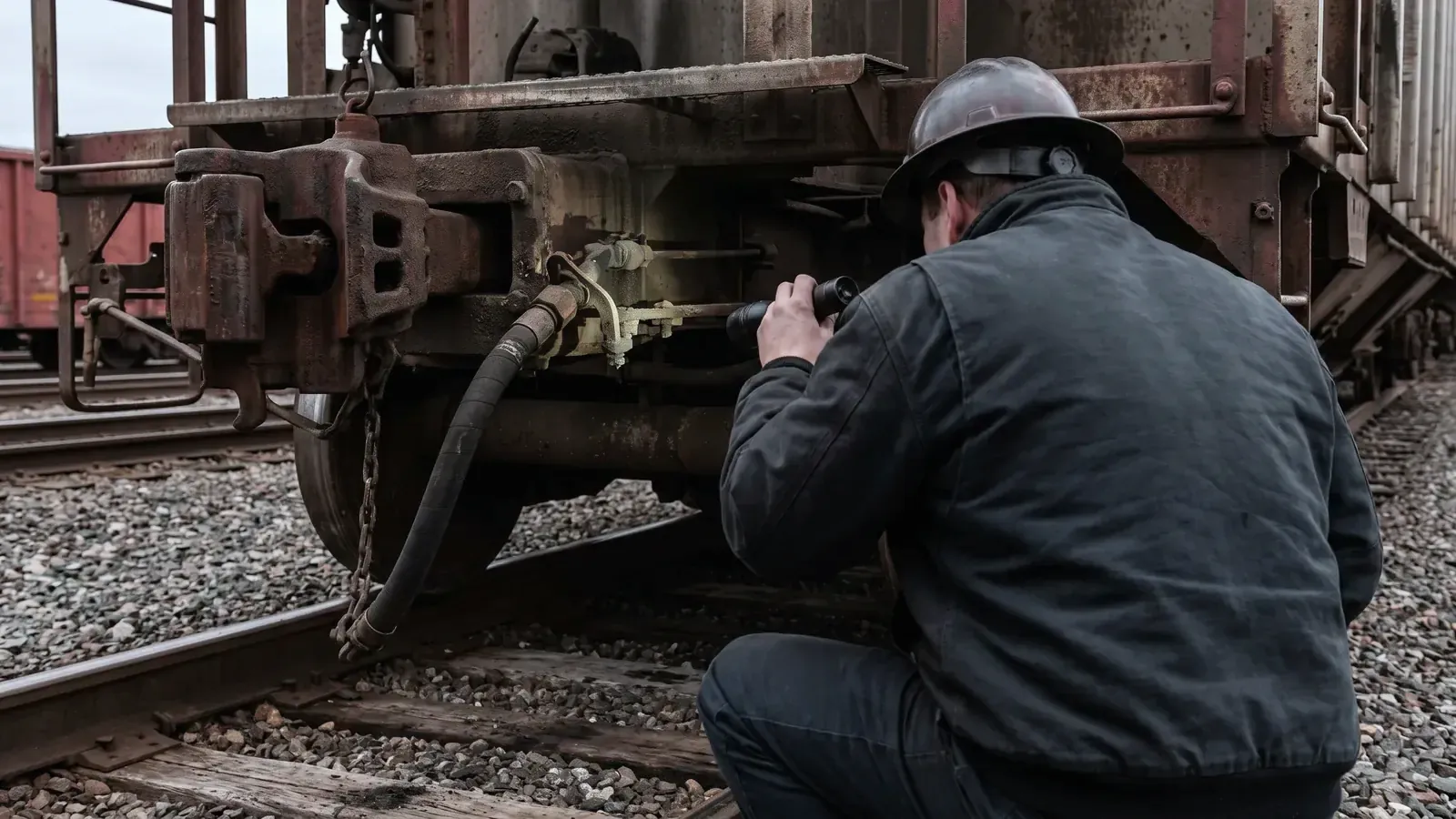
These jobs in the FRA's employee reports
| On-duty injury and illness reports, 2021 to 2025 | 759 |
|---|---|
| Occupational illness reports | 74 |
| Hearing loss from noise | 69 |
| Job titles with the most reports | Carmen (Other); Carmen (Freight) |
Official source: FRA injury and illness reports (Form 55a). Counted across the 17 railroads on this site from the FRA's on-duty employee reports, refreshed quarterly. Railroad injury statistics for all 17 railroads
Daily work in the car shop
When rail cars roll into the yard, carmen look them over inside and out for defects, wear, and damage, and then fix what they find. The federal job description at O*NET lays out this work. That description also covers removing locomotive and car mechanical units and other parts using equipment like hoists, jacks, pinch bars, ordinary hand tools, and torches for cutting metal.
Carmen also repair, build and install steel or wood fittings, working from blueprints and shop sketches. Rail car welder and rail car sandblaster are two job titles reported under this occupation.
Welding fume and cancer
Welding makes visible smoke that contains harmful metal fume and gas by-products. In its welding fact sheet, the federal workplace safety agency warns that breathing welding fume over a long period can lead to cancers of the lung, larynx, and urinary tract.
Those fumes may include metals such as arsenic, beryllium, cadmium, chromium, and nickel. The heat of welding turns chromium into hexavalent chromium, a highly toxic fume that can harm the eyes, skin, nose, throat, and lungs, and it can lead to cancer. OSHA caps the amount workers may breathe, measured as an average across a full eight-hour workday.
In March 2017, the International Agency for Research on Cancer brought together 17 scientists from 10 countries to weigh the evidence on whether welding and two related chemicals cause cancer. Their findings were summarized in the medical journal The Lancet Oncology, and the full review is to be published as IARC Monographs Volume 118.
Asbestos in the steam locomotive years
Before diesel power replaced steam in the 1950s, some railroad workers had heavy asbestos exposure. In this study, researchers mailed questions to 514 people working for an active U.S. railroad and found likely past asbestos exposure in 21% of workers age 50 or older, versus three percent of younger workers.
Among the older workers with likely past asbestos exposure, exposure lasted from six months to 15 years; half reported three years or less, and half reported three years or more. People who put in time in railroad shops years ago may still carry that asbestos history with them. The study also pointed to earlier research on mesothelioma among railroad machinists.
Why do official injury reports list so little cancer?
Cancer often shows up years after exposure, often after a worker has left the railroad, so it seldom makes it into railroad injury files. Most work-related cancers never show up in those FRA injury reports, so a missing report does not mean there is no claim.
Those records still show how often carmen were hurt or made ill on duty from 2021 to 2025.
| Report kind, 2021–2025 | Carmen count |
|---|---|
| On-duty injury or illness | 759 |
| Occupational illness cases | 74 |
| Hearing loss from noise | 69 |
The totals combine two FRA job categories: 403 reports under Carmen (Other) and 356 under Carmen (Freight). These reports cannot tell us how many carmen went on to develop cancer.
The law behind a carman claim
FELA, the federal law that covers railroad workers, says a railroad is responsible when carelessness by its people played any part in a worker's injury or death (45 U.S.C. § 51). In 1949, the Court made clear that this covers slow-developing illnesses from the job, not only accidents (the opinion).
The railroad's negligence need only contribute, even in a small way. The Supreme Court made that point in Rogers v. Missouri Pacific back in 1957, then said it again in CSX v. McBride in 2011.
Even a worker who shares some of the blame is not shut out; instead, the jury trims the award to match that share, under 45 U.S.C. § 53. Nor is a worker treated as having accepted job dangers when railroad negligence caused the injury, under 45 U.S.C. § 54. When the worker has died, the personal representative brings the claim on behalf of the surviving spouse and children.
How much time is there to file?
You have three years to file a FELA case, in either federal or state court (45 U.S.C. § 56). For an illness like cancer that takes years to appear, the Supreme Court has said the three years start when the illness shows itself, not when the exposure happened.
One case shows why timing matters. A railroad car inspector was diagnosed with bladder cancer in May 2014, when his doctor also linked it to what he had breathed at work. He filed in April 2019. In an unpublished January 2026 opinion, a New Jersey appeals court upheld the dismissal of claims for the cancer as it existed in 2014 because the three-year deadline had passed (the court's opinion). Because the clock matters, it helps to gather your work history early, and former coworkers are free to share what they remember: federal law makes void any railroad rule or contract that tries to keep employees from sharing information about a worker's injury or death (45 U.S.C. § 60).
Questions people ask
What can a railroad cancer claim cover?
Railroad workers fall outside state no-fault workers' compensation, so they pursue their losses from the railroad under FELA, as a Government Accountability Office report explains. That can cover medical bills, past and future lost wages, plus pain and suffering. And in Norfolk & Western v. Ayers, the Court let a worker with work-related asbestosis be compensated for a real and serious fear of getting cancer.
What happens when I ask for a review?
The phone number and the short form both go to a law firm that handles FELA claims for railroad workers and advertises on Railroad Cancer, and the review is free. It helps to have your railroads, years, job titles and the yards or shops you worked in ready, along with your diagnosis and when a doctor first said your illness could be tied to work. The call may be recorded so the attorney's office has an accurate record of your work history.
Which railroad jobs saw the heaviest asbestos exposure?
The greatest exposure fell on older workers whose duties included repairing steam locomotives, the railroad asbestos survey reports. Of the older workers with exposure, 30 percent had current job titles that no longer suggested that earlier exposure, so a carman's current title may reveal little about what that person inhaled years before.
Call +1 (888) 716-2611 Questions about your own case? Ask in a free FELA claim review by phone, or send the short form