
Railroad creosote exposure and cancer
If you built railroad track or bridges with creosote-treated wood, you may have had creosote exposure by breathing it in or absorbing it through your skin. Years of exposure on the job is linked to cancer in several parts of the body. A railroad worker who develops one of these illnesses may have a federal claim against the railroad.
Call +1 (888) 716-2611 Free FELA claim review if this was part of your railroad work
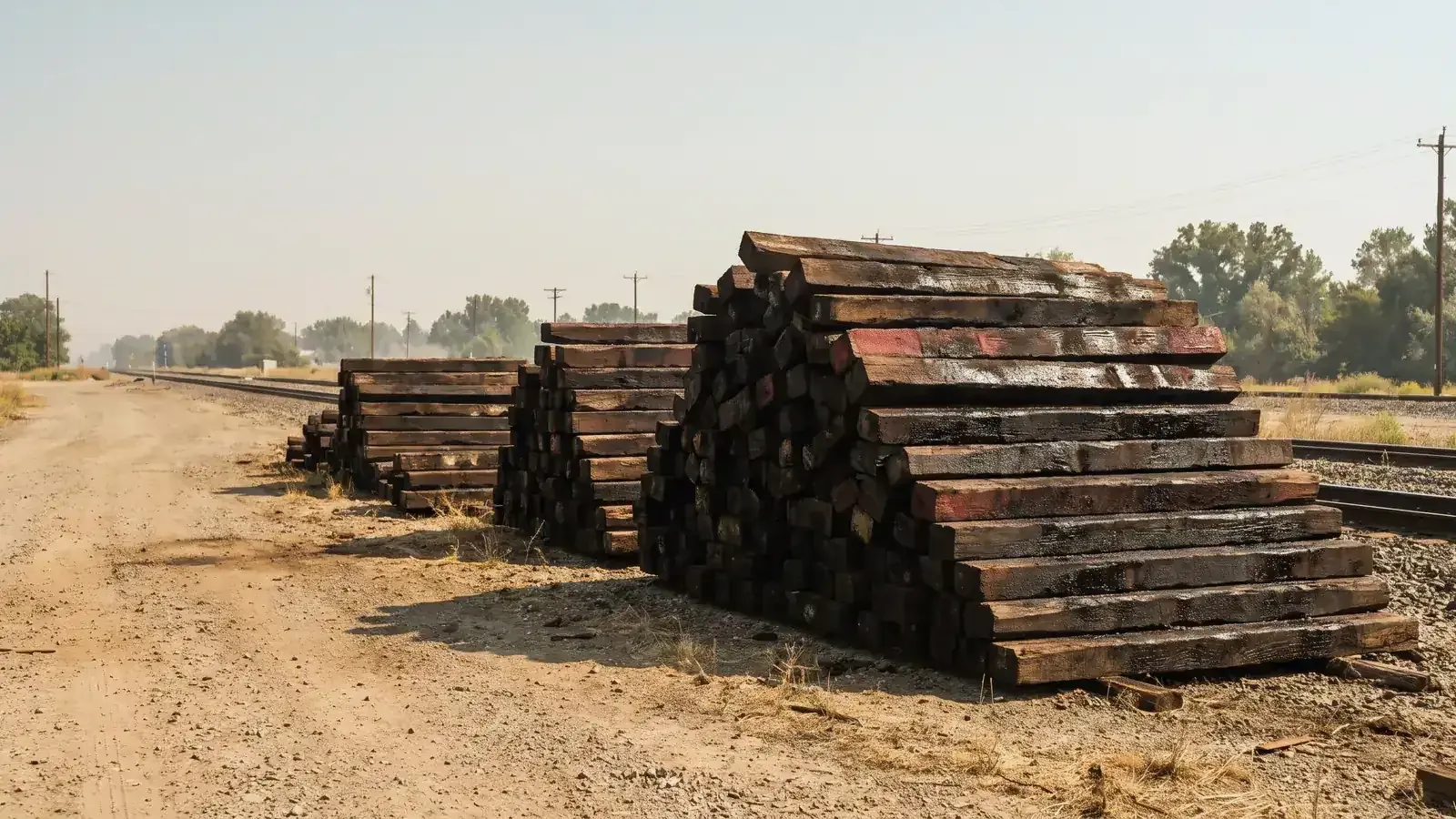
How are railroad workers exposed to creosote?
Creosote is a name for several products made by burning wood or coal, and each one is a mixture of many chemicals. Coal tar creosote is the wood preservative used most often in this country.
The CDC names putting up railroad tracks, bridges, or fences using creosote-treated wood as one job that brings exposure. Putting in telephone poles is another. These chemicals can get into the body through the lungs, the mouth, or the skin.
Coal tar, which gives us coal tar creosote, comes from producing coke, a fuel that is mostly carbon. Both coal tar and coal-tar pitch carry cancer-causing chemicals such as benzene.
Cancers tied to creosote at work
Long-term exposure to creosote at work has been linked to several cancers, including skin, lung, bladder, and kidney cancer.
According to the National Cancer Institute, being exposed to coal tar or coal-tar pitch at work makes skin cancer more likely. Lung, bladder, kidney, and digestive tract cancers have also been connected with this kind of exposure.
Health agency ratings for creosote
The word "carcinogen" refers to any substance that can bring on cancer. These agencies weigh how strong the proof is that a substance can cause cancer in humans.
| Source | Material | Finding |
|---|---|---|
| HHS (Department of Health and Human Services) | Coal tars, coal-tar pitches, and emissions from coke ovens | Known to cause cancer in people |
| EPA (Environmental Protection Agency) | Emissions from coke ovens | Known to cause cancer in people |
| EPA | Creosote | Likely to cause cancer in people |
| IARC (International Agency for Research on Cancer) | Creosotes | Likely to cause cancer in people |
Filing a FELA claim as a railroad worker
Most American workers injured at work turn to the state workers' compensation system. Railroad workers are not covered by it. Instead, a federal law called the Federal Employers' Liability Act (FELA) lets them recover their losses directly from the railroad when its negligence played a part in their illness or injury.
FELA makes the railroad answerable when an employee's injury or death comes in whole or in part from negligence by its officers, agents, or employees. Negligence means not taking reasonable care. The Supreme Court said the railroad's negligence only has to play some part, however small.
FELA reaches illnesses that build slowly from work too, not only accidents. A worker who shares some blame can still recover, but the jury cuts the damages by that worker's share of fault. When the railroad's negligence played a part, a worker is not seen as having taken on the risks of the job.
Damages can include medical expenses, lost wages past and future, and pain and suffering.
Filing deadline for a FELA claim
Under FELA, a case has to be filed within three years, and it can go to either a federal or a state court. For an illness that builds slowly, the three years begin when the effects of the exposure appear.
That date can decide a case. A New Jersey appeals court ruled in January 2026 to keep in place the dismissal of a car inspector's bladder cancer claim because he filed too late. In May 2014, his doctor told him the cancer was linked to the air at his job. He waited until April 2019 to file, so the court said his claim for the cancer as it was in 2014 came too late. If a doctor has linked your illness to your work, it helps to get your claim reviewed soon. On the free call, you'll be asked which railroads you worked for and when, your job titles, where you worked, and when a doctor first connected your illness to your job.
Claims when a worker has died
When the worker has died, the claim goes to the estate's personal representative. It is brought to benefit the surviving spouse and children.
Questions people ask
Are creosote railroad ties toxic?
Yes, they can be harmful. Both the EPA and the IARC say creosote is a probable human carcinogen. When coal tar products were applied to the skin in animal research, skin cancer resulted.
Is it unhealthy to live next to train tracks?
The sources cited here do not tell us the health risk of living near railroad tracks. The National Cancer Institute notes coal tar can reach the general public through environmental contamination.
Why doesn't the railroad have a record of my cancer?
The injury reports railroads file with the government seldom note cancer, since it tends to appear years after exposure, often after the worker has moved on. Most work-related cancers never show up in those FRA injury reports, so a missing report does not mean there is no claim.
May the railroad block coworkers from sharing information?
No. A railroad rule or contract meant to keep employees from freely passing along facts about an injury or death is void.
Call +1 (888) 716-2611 Questions about your own case? Ask in a free FELA claim review by phone, or send the short form