
Cancer in railroad electricians
When railroad electricians get cancer, the story often begins on the job: aging transformers, capacitors, and light fixtures filled with PCBs, along with repair shops where asbestos was once common. Federal law gives railroad employees who get sick because of their work a way to seek payment from the railroad.
Call +1 (888) 716-2611 Free FELA claim review for your craft
These jobs in the FRA's employee reports
| On-duty injury and illness reports, 2021 to 2025 | 511 |
|---|---|
| Occupational illness reports | 66 |
| Hearing loss from noise | 58 |
| Job titles with the most reports | Electrical Workers (A); Electrical Workers (B) |
Official source: FRA injury and illness reports (Form 55a). Counted across the 17 railroads on this site from the FRA's on-duty employee reports, refreshed quarterly. Railroad injury statistics for all 17 railroads
The work railroad electricians do
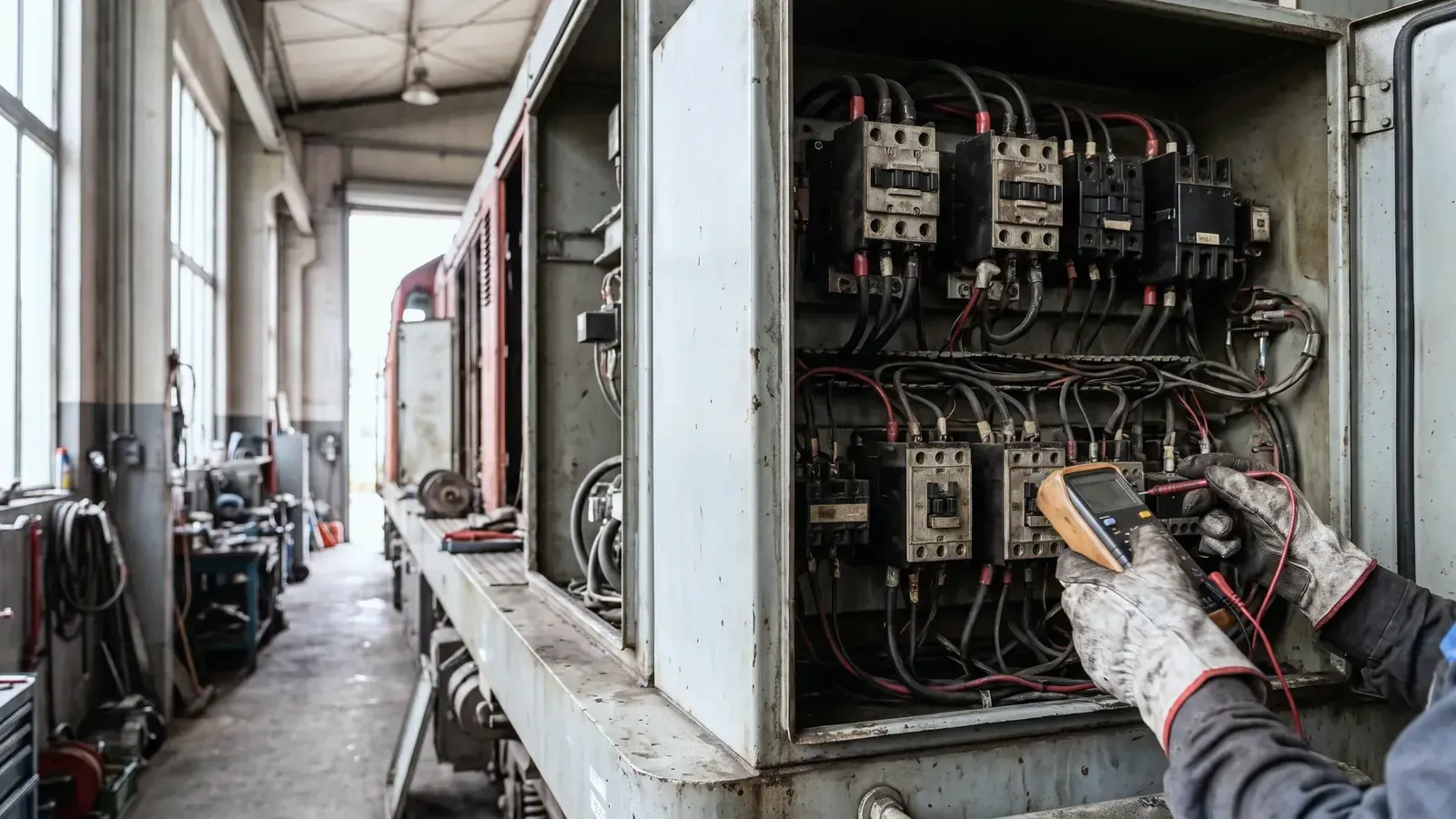
According to O*NET, these workers put in, look after, and fix electrical wiring, equipment, and fixtures, or they supervise the people doing that work. Day to day, they test and adjust equipment, fix machines with moving components, keep an eye on gauges and dials, and figure out why equipment has failed.
There is also an emergency side to the job. An electrician might set up floodlights or run a generator, put out flares, or operate a forklift or similar vehicle. When O*NET surveyed them, 69 percent described their responsibility for coworkers' safety as very high.
PCBs in old electrical equipment
PCBs are chemicals people made to cool and lubricate transformers, capacitors, and similar gear. Per the CDC, many American PCB mixtures carried the trade name Aroclor, and production in this country ended in 1977.
Anything built before 1977 can still hold PCBs. That covers aging fluorescent fixtures, PCB capacitors, and hydraulic oils. Exposure happens when workers service and fix PCB transformers, or when an old device catches fire, leaks, or is damaged in an accident.
Leaking transformers from decades ago remain a problem right now. PCBs resist breaking down, so once they escape they can stay in the environment for a very long time.
Which cancers have been tied to PCBs?
The CDC notes that a few studies of workers connect PCBs with cancers of the liver and the biliary tract, the passage that moves bile out of the liver.
Asbestos in railroad shops
Asbestos exposure ran heavy for some railroad employees before the industry swapped steam engines for diesel in the 1950s. One survey of 514 employees at a single U.S. railroad showed the heaviest exposure among the older workers who had fixed steam locomotives.
| Age bracket | Workers likely exposed to asbestos |
|---|---|
| Age 50 and up | 21 percent (50 of 242) |
| Age 49 and below | 3 percent (9 of 275) |
A lot of these exposures lasted only a short time, with a middle value of three years, though they stretched anywhere from six months up to 15 years. Among the older exposed group, 30 percent held a job title at survey time that gave no sign of earlier asbestos contact. A person can leave the shop floor for another role and still bring that exposure history along.
Electrical workers in FRA reports
The Federal Railroad Administration receives reports of on-duty injuries and illnesses from railroads. The FRA data from 2021 to 2025 for electrical workers at the 17 railroads this site tracks looks like this.
| Report type | Count |
|---|---|
| Total on-duty injury and illness reports | 511 |
| Job-related illness reports | 66 |
| Noise-caused hearing loss | 58 |
The numbers span two FRA job categories: Electrical Workers (A) account for 490 reports, and Electrical Workers (B) for 21. Cancer almost never shows up in this data, since it tends to surface years after the exposure, frequently once the person no longer works for the railroad. Most work-related cancers never show up in those reports, so a missing report does not mean there is no claim.
How does FELA cover railroad cancer?
The Federal Employers' Liability Act, known as FELA, holds a railroad liable when an employee is hurt or killed in whole or in part through the railroad's negligence. Negligence means the railroad, its officers, or its workers did not use reasonable care. State workers' compensation does not apply to railroad employees, so FELA is their route to recovering losses, as a GAO report lays out.
In Urie v. Thompson, the Supreme Court ruled that FELA reaches work-related diseases, not just accidents. And the railroad's negligence needs only to contribute, no matter how small that contribution is.
Sharing some of the blame does not block recovery. Per 45 U.S.C. § 53, a jury reduces the payment to match the worker's portion of fault. Nor is a worker considered to have accepted the risks of the job where railroad negligence contributed.
The three-year filing deadline
The deadline for filing a FELA case is three years, and the case can go to federal or state court. With slow-developing diseases, the clock begins once the exposure's effects become apparent.
Deadlines can make or break a claim. A New Jersey appeals court in 2026 affirmed the dismissal of a car inspector's bladder cancer case. In May 2014 his physician told him the cancer was connected to what he breathed at work, yet he waited until April 2019 to sue, according to the appeals court's decision.
Frequently asked questions
Does this website do the free claim review?
No. Your review is passed to a law firm that advertises here and represents railroad workers in FELA matters. The attorney's office may record the call to keep a precise account of your work history. Expect questions about which railroads employed you and when, the titles you held, the yards, shops, or lines involved, what you were diagnosed with, and when a doctor first said it could be tied to work.
What can a railroad cancer claim pay for?
Per the GAO, FELA permits recovery for medical costs, wages already lost and wages yet to be lost, and pain and suffering. The Supreme Court also decided in Norfolk & Western v. Ayers that someone with work-caused asbestosis may recover for a genuine and serious fear of getting cancer.
Could PCBs from my job reach my family?
Yes, that is possible. According to the CDC, PCBs can ride home on a worker's clothing, skin, or equipment.
If the worker has died, can the family file?
Yes. Under 45 U.S.C. § 51, the worker's personal representative holds the claim and pursues it on behalf of the surviving spouse and children.
Can the railroad keep coworkers from discussing my illness?
No. A railroad rule or contract that tries to keep employees from openly exchanging details about a worker's injury or death is void.
Call +1 (888) 716-2611 Questions about your own case? Ask in a free FELA claim review by phone, or send the short form