
Railroad herbicide exposure and cancer
Researchers have studied exposure to railroad herbicides among workers, and some of that work points to more tumors and more deaths from tumors than expected. Weed killers get sprayed along the rails, and people who mixed them, applied them, or spent time around them may now wonder if a cancer diagnosis traces back to that job.
Call +1 (888) 716-2611 Free FELA claim review if this was part of your railroad work
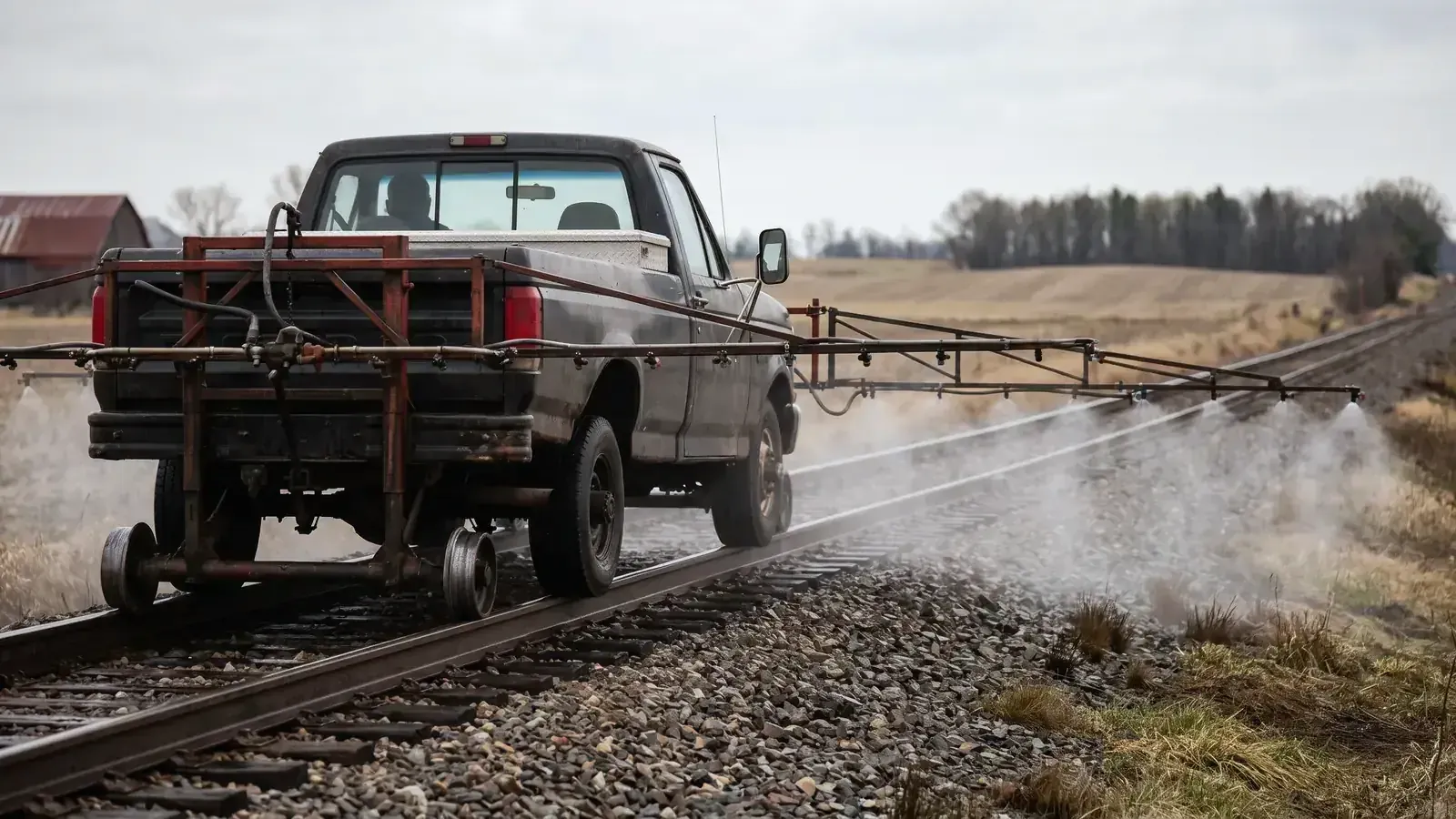
Swedish track workers and weed spray exposure
One study tracked 348 Swedish railroad workers who had contact with herbicides, following them through October 1978. Deaths from tumors ran higher than expected in this group, and the updated report backed up the earlier finding of too many tumors.
The biggest excess showed up in workers who, during the study's earlier years, had contact with both amitrol and phenoxy acids, which are two types of weed killer. That combination seemed to hit workers the hardest.
No single kind of tumor stood out, though the group included three stomach cancers and three lung cancers. The study's authors said it is still fairly unclear which chemical was responsible.
| Weed killer group | What the follow-up found |
|---|---|
| Amitrol alone | The extra tumor deaths grew less pronounced |
| Phenoxy acids | A slightly higher tumor death rate grew more pronounced |
| Amitrol and phenoxy acids together | These workers seemed the most seriously affected |
These results line up with animal research and with studies of other people. The authors urged that amitrol and phenoxy acids be handled with care, calling them increasingly suspect as potential cancer-causing agents.
Glyphosate and Lymphoma
Back in March of 2015, the cancer research agency of the World Health Organization classified glyphosate as probably carcinogenic to humans, meaning it can probably cause cancer in people. Seventeen experts from 11 countries looked at roughly 1,000 studies.
| Kind of evidence | Finding |
|---|---|
| Cancer in people, from real-world contact | Limited |
| Cancer in lab animals | Sufficient |
| DNA damage | Strong |
Several studies of people exposed to glyphosate at work, including farmers, found higher cancer rates. The connection was with non-Hodgkin lymphoma, an immune system cancer, and it held across different places and time periods. A large US study covering over 50,000 farmers and pesticide applicators turned up no connection, though the agency pointed to its short follow-up period as a weakness.
Certain herbicides, insecticides, and benzene also appear on the American Cancer Society list of possible risk factors for this lymphoma. The group notes that scientists are still studying these chemicals.
Other things that raise lymphoma risk
Chemical exposure is not the only thing doctors consider. The American Cancer Society says these factors matter too:
- Age, because most cases arise in people 60 and up
- Male sex
- Having a sibling, parent, or child who has had the disease
- An immune system that has been weakened, such as by HIV
- Past radiation treatment or some chemotherapy drugs
Can a railroad worker sue over cancer from herbicides?
State workers' compensation does not cover railroad workers. Instead, they recover their losses from the railroad through the Federal Employers' Liability Act, or FELA. Under the law, the railroad is liable if its negligence played even a partial role in an injury.
The Supreme Court has held that even the smallest contribution of negligence by the railroad is enough. FELA reaches slowly developing work diseases too, not just accidents.
Even a worker who shares some of the blame can recover, though the damages are reduced by that portion. Recoverable damages include medical bills, wages lost in the past and in the future, and pain and suffering. When a worker has died, the personal representative brings the claim for the benefit of the worker's widow or widower and children.
One recent glyphosate lawsuit
A former track foreman filed suit against the Long Island Railroad under FELA on January 15, 2026, in New York federal court. He says he was exposed to glyphosate and diesel fumes on the job, and that the railroad never trained him about the chemicals.
His claims also include poor ventilation, lax supervision, and a lack of protective equipment. His cancer is in remission, yet his doctors put the odds of it coming back at 83%. He is seeking over $200,000.
The three-year deadline to file
The deadline to file a FELA case is three years. For an illness that builds up slowly, the three years usually start when the harm from the exposure shows itself.
That timing can decide a case. In a 2026 New Jersey appeal, the court upheld a ruling that a car inspector's claims for his bladder cancer as it existed in 2014 were filed too late, since his doctor had linked the cancer to his work in May 2014 but he filed in April 2019.
Common Questions
Which weed killers have railroads used?
The studies of railroad workers examined amitrol and phenoxy acids in Sweden, while the recent US lawsuit concerns glyphosate. Exposure for most people comes through commercial glyphosate products, which carry other ingredients as well.
Will my cancer appear in railroad injury records?
Usually not. Cancer often surfaces years after the exposure, frequently once the worker has already left the railroad. Most work-related cancers never show up in those FRA injury reports, so a missing report does not mean there is no claim.
Can coworkers discuss what we were exposed to?
Yes. Federal law makes void any railroad rule or contract that tries to keep employees from voluntarily sharing information about a coworker's injury or death.
Does taking a job around chemicals mean you accepted the risk?
No, it does not. When negligence by the railroad caused the injury, fully or partly, the employee is not considered to have assumed that risk.
Call +1 (888) 716-2611 Questions about your own case? Ask in a free FELA claim review by phone, or send the short form