
Railroad silica exposure and lung disease
Railroad silica exposure comes from two main sources: the crushed stone under the track and the sand locomotives drop on the rails for grip. Either one can put crystalline silica into the air. That mineral occurs naturally in rock, dirt, and sand, and breathing its dust can send it deep into the lungs. Long exposure has been linked to silicosis, other diseases that scar the lungs, and lung cancer among railroad workers.
Call +1 (888) 716-2611 Free FELA claim review if this was part of your railroad work
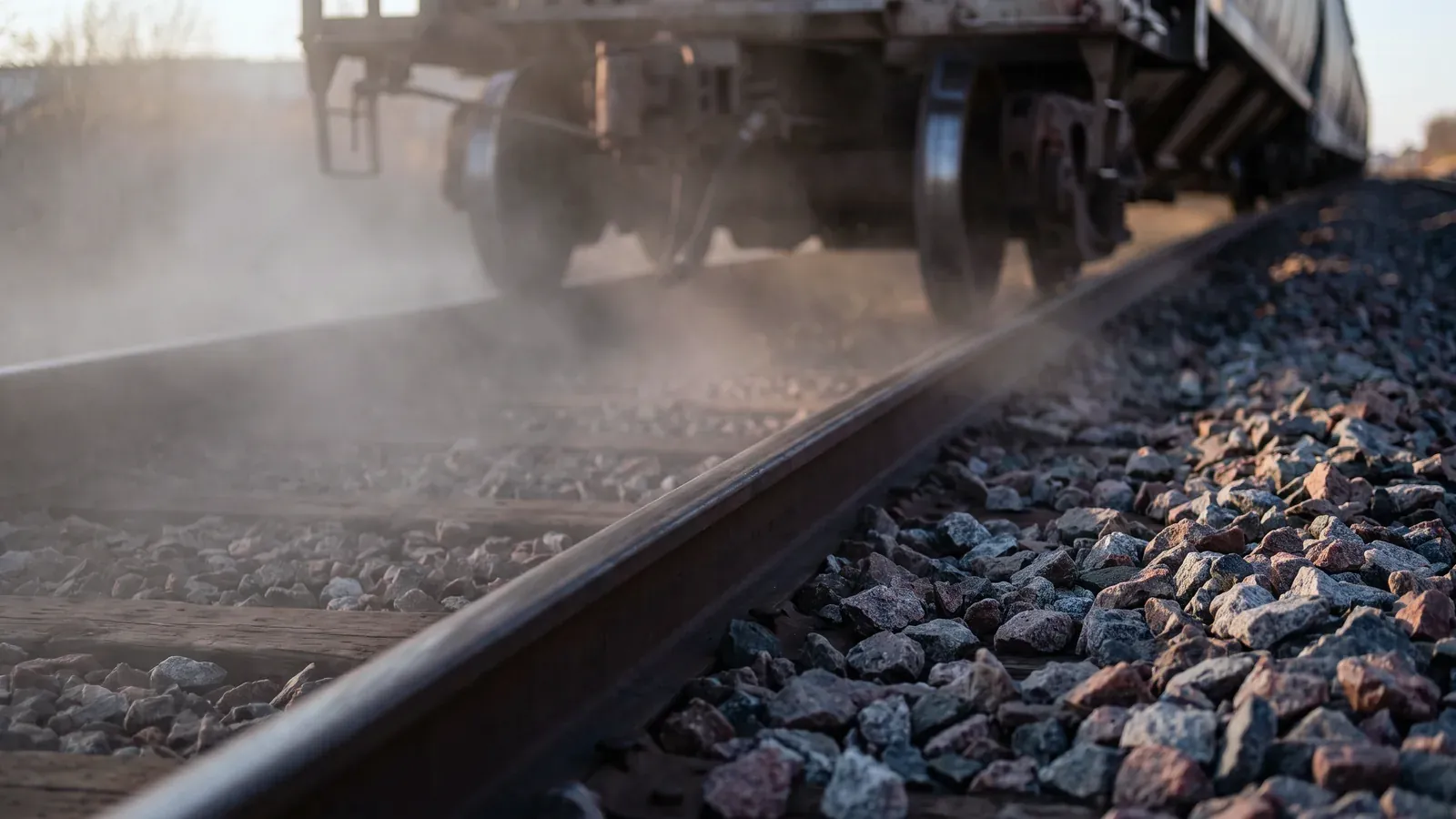
Railroad ballast dust
This layer of crushed stone keeps ties and rails where they belong. Many railroads choose granite, and granite often holds 20 to 50 percent crystalline silica.
The rock by itself is not the danger. The danger is the dust. Heavy machinery disturbing the stone beneath railroad tracks can create clouds of silica dust, putting track crews at risk of breathing it in.
The greatest risk falls on track repair and track maintenance work. Back in 1996, a law firm contacted OSHA on behalf of track crews at big carriers like Norfolk Southern and CSX, workers who had come down with silicosis or mixed dust lung disease after years on the job. OSHA answered that track work is within its jurisdiction and that its silica enforcement program applies to every industry, including the railroads.
Locomotive Sand
Locomotives also haul sand and drop it on the rails to keep the wheels from slipping. The Supreme Court's leading case on this topic involved sand that was 80 to 90 percent silica in the locomotive sanders.
Tom Urie brought that case. He spent about thirty years as a locomotive fireman before illness in his lungs made him leave the job in 1940. In 1949 the Supreme Court ruled that Urie's silicosis was covered under FELA, the federal law that protects injured railroad workers.
What lung diseases does silica cause?
Silicosis slowly scars the lungs after years of breathing silica dust. Track workers who spent years in granite dust have also brought claims over mixed dust lung disease and other interstitial lung disorders, which are other forms of lung scarring.
Lung cancer is the other major concern. Workers exposed to breathable crystalline silica get lung cancer more often. The clearest proof comes from people who worked in quarries and granite, and many railroads use granite for ballast.
At the Roseville, California rail yard, more than 30 one-time Union Pacific employees blame silica, diesel exhaust, and fumes for chronic lung disease, along with bladder, kidney, and lung cancer. The workers allege that Union Pacific knew about toxic conditions as far back as the 1950s and failed to provide proper warnings, ventilation, and protective equipment.
Does FELA cover silica disease?
This federal law lets railroad workers sue an employer for harm suffered on the job. Railroad workers aren't covered by state workers' compensation the way most American workers are, so this law is their path to recovery.
The law covers illnesses that develop slowly, not just sudden accidents. In Urie's case, the Supreme Court held that an illness caused by the railroad's negligence counts as a compensable injury. Refusing those claims, the Court said, would make the law nothing more than a delusive remedy.
A railroad is liable when its negligence helped cause the disease, in whole or in part. Later decisions say that share can be very small indeed. A railroad can be negligent when it knew or should have known that ordinary industry practices did not protect workers well enough. Even a worker who shares some of the blame can still recover, though the award drops by that share.
Damages can cover medical bills, wages lost now and in the years ahead, and pain and suffering. If the worker has died, the personal representative pursues the claim for the worker's surviving spouse and children.
The three-year deadline
A FELA suit has to be brought within three years of the day the claim accrued, in either federal or state court. For a dust illness that forms over decades, the clock does not start when the dust is first breathed. The Supreme Court refused that starting point, because no worker can be expected to recognize a disease at a moment when no one could yet know.
Rather, a worker counts as injured once the effects of the exposure begin to show. The day a doctor first connects the illness to work matters a lot. Early in 2026, New Jersey appellate judges left a car inspector's bladder cancer case dismissed: the doctor had tied the cancer to work in May 2014, the filing came in April 2019, and the three-year limit barred the claim.
Frequently asked questions
What goes into railway ballast?
Many railroads use crushed granite for ballast. Granite is rich in quartz, the most common form of crystalline silica, and dust from working it can carry crystalline silica.
Is living near train tracks a health risk?
High levels of silica exposure occur mostly on the job and in industry. For the general public, the main source is airborne dust from commercial products that contain quartz, such as paint, caulk, talcum powder, pet litter, art clays, cosmetics, and cleansers. We haven't found good information on the risk for people who simply live near the tracks.
How can you tell if you were exposed to silica?
The best guide is work history. Time spent on track repair, track maintenance, or near locomotive sanding points to exposure. Workers who suspect too much exposure today may file a complaint with their local OSHA office. OSHA also keeps a silicosis coordinator in every regional office.
How much exposure to silica dust does it take to get silicosis?
Known cases involve years of railroad work, but they do not show how much exposure it takes to develop silicosis. Urie put in roughly three decades as a fireman, while the Roseville workers describe many years in the yard. Railroad injury records seldom capture these illnesses, because cancer usually shows up years after exposure, often after the worker has already left the railroad.
Call +1 (888) 716-2611 Questions about your own case? Ask in a free FELA claim review by phone, or send the short form