
Kidney cancer in railroad workers
A railroad worker facing kidney cancer has every reason to wonder whether the job contributed. Trichloroethylene, a solvent used mainly to clean grease off metal equipment, can cause kidney cancer. Former Union Pacific workers who are suing over conditions at a California rail yard link kidney cancer to silica exposure there. Federal law lets a railroad be held responsible when its carelessness contributed even slightly to an employee's illness.
Call +1 (888) 716-2611 Free FELA claim review for railroad workers with this diagnosis
How do railroad jobs raise the risk?
Trichloroethylene is a clear, factory-made liquid that does not occur in nature. One of its main uses in industry is cleaning grease off metal equipment.
People who handle it breathe it in and soak it up through the skin. According to the American Cancer Society, on-the-job exposure to trichloroethylene, along with the metal cadmium, counts among the possible causes of renal cell carcinoma. This cancer is the most common form of kidney cancer.
Men develop this disease about twice as often as women. One possible reason is that men have historically faced greater exposure to cancer-causing chemicals on the job.
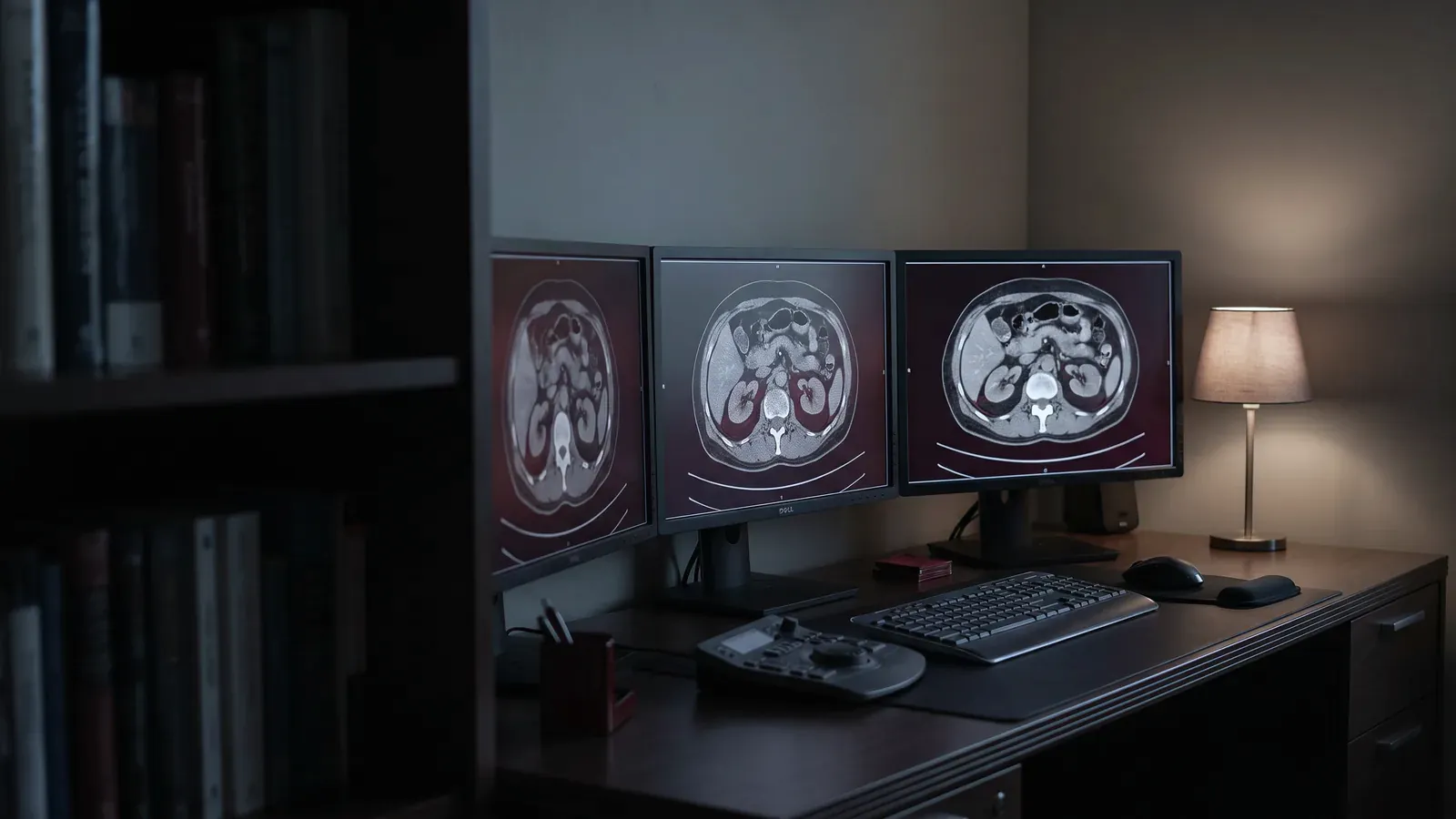
Solvents studied for kidney cancer links
Scientists working at the National Cancer Institute matched 1,217 kidney cancer patients against 1,235 people who did not have the disease, examining six cleaning solvents. An industrial hygienist, a specialist in workplace exposures, estimated how much of each solvent each person had likely encountered at work.
| Solvent | Kidney cancer finding in the study |
|---|---|
| Perchloroethylene | Roughly triple the risk at high exposure |
| Trichloroethylene | Elevated risk with heavy exposure, though not conclusive |
| 1,1,1-trichloroethane | No association found |
| Carbon tetrachloride | No connection found |
| Chloroform | No link seen |
| Methylene chloride | None found |
Perchloroethylene is a different cleaning solvent, familiar mainly from dry cleaning. Its connection to kidney cancer remained even after the researchers set aside people who were likely exposed to trichloroethylene. Trichloroethylene on its own is already classed as a kidney carcinogen by IARC (the International Agency for Research on Cancer), which means the study builds on what was known instead of replacing it.
Other factors that add to the risk
A railroad cannot escape responsibility just because a worker had other risk factors too. Even so, expect a doctor to ask about them, so knowing the list helps.
Smoking raises the chance of renal cell carcinoma, and the extra risk depends on how heavily a person smokes. The risk comes down only slowly after someone quits. Carrying extra body weight and having high blood pressure both push the risk up as well.
Family history carries the most weight when a sibling has had kidney cancer. Taking pain medicines like acetaminophen over many years, and advanced kidney disease that requires dialysis, may also raise the chances.
Filing a railroad kidney cancer claim
State workers' compensation does not cover railroad workers. Instead, they sue the railroad for their losses under FELA. That acronym stands for the Federal Employers' Liability Act, and it gives a railroad employee the right to sue the railroad over an injury or illness tied to work.
A railroad is liable when the illness stemmed in whole or in part from negligence by its officers, agents, or employees. According to the Supreme Court, the railroad's carelessness only has to play some part, however small. The Court also confirmed back in 1949 that FELA applies to occupational diseases that develop slowly, not only to accidents.
A worker who shares part of the blame can still recover. The jury lowers the award in proportion to the worker's share of fault instead of dismissing the case. Nor is a worker considered to have accepted the dangers of the job when negligence by the railroad caused the harm.
Over 30 former Union Pacific employees have sued, pointing to conditions at the Roseville, California rail yard and naming illnesses that include bladder, kidney, and lung cancer. The workers say the railroad knew about the toxic conditions as early as the 1950s and still did not provide warnings, ventilation, or safety gear.
The three-year deadline
A FELA case has to be filed within three years of the day the claim arose, in either federal or state court. With a disease like cancer, the countdown starts when the illness becomes apparent rather than when the exposure happened, under the Supreme Court's decision in Urie v. Thompson.
This deadline is firm. Early in 2026, an appeals court in New Jersey ended a bladder cancer claim brought by a railroad car inspector because he had been diagnosed in May 2014, told then that the cancer was tied to work, and only filed in April 2019. The day a doctor first connects the cancer to work is the date to record and hold onto.
Putting together the work history
Official railroad injury reports hardly ever mention cancer, since it often does not appear until long after the exposure, sometimes not until the worker has retired. Most work-related cancers never show up in those FRA injury reports, so a missing report does not mean there is no claim. During a free claim review with a law firm that handles FELA claims, the reviewer asks about your employers, years worked, job titles, and which yards, shops, or lines you worked.
Coworkers from those years can help. Any railroad rule or contract that tries to keep employees from willingly providing information about a worker's injury or death has no force under federal law.
Common questions on railroad kidney cancer claims
What does a railroad cancer claim pay for?
FELA allows recovery of medical bills, pay already missed and pay still ahead, and pain and suffering. The justices have also let a worker suffering from a work-related lung illness win damages for a real and serious fear that cancer might develop.
If the worker has died, can the family claim?
Yes. The claim then passes to the personal representative of the estate, on behalf of the surviving spouse and children. A FELA case still has to be filed within three years, so it helps to talk with someone soon about which dates matter in your family's situation.
Call +1 (888) 716-2611 Questions about your own case? Ask in a free FELA claim review by phone, or send the short form